When planning a roof replacement, it is easy to focus on shingles, colors, and the overall price. Flashing is less noticeable, but it deserves a clear place in the project.
These components help direct water away from roof joints, walls, and openings. If worn or poorly fitted flashing stays in place, new shingles may not solve an existing leak problem.
Does every piece need replacement? Not always. But damaged or unsuitable flashing should not be reused simply to lower the estimate. The decision should account for its condition, the new roofing materials, and applicable installation requirements.
What Does Roof Flashing Do?
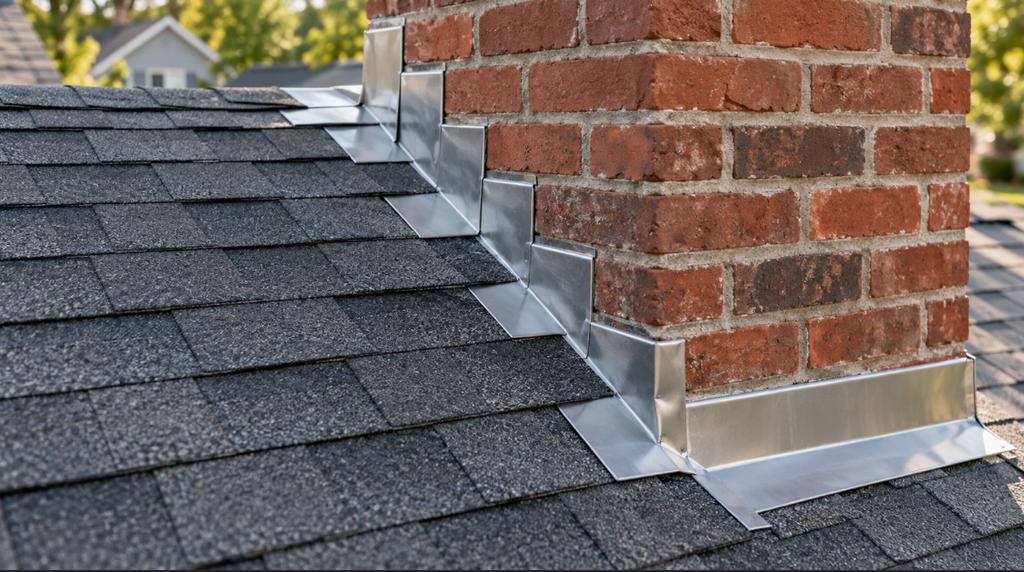
Flashing protects areas where the roof changes direction, meets another surface, or surrounds an opening. Common locations include chimneys, skylights, plumbing vents, valleys, and roof-to-wall connections.
Different areas need different flashing details:
- Step flashing works with individual shingle courses along a sidewall.
- Counterflashing overlaps underlying flashing to help keep water from getting behind it.
- Pipe flashing helps seal the area where a vent pipe passes through the roof.
- Valley flashing, where the roof design uses it, helps channel runoff where two roof slopes meet.
These pieces must work with the shingles, underlayment, and surrounding wall materials. A reliable installation gives water a path down and off the roof.
Sealant may be part of a specified detail, but it cannot make up for missing flashing or incorrect overlaps.
Why Can Old Flashing Be a Problem?
Existing flashing may have rust, cracks, holes, or bent edges. Old roofing cement can also make its condition harder to judge.
Some damage remains hidden beneath shingles or behind siding. The absence of an indoor water stain does not establish that every concealed component is sound.
Tear-off can create additional problems. Removing shingles and fasteners may bend, tear, or otherwise damage flashing that previously appeared usable.
That is why the contractor should assess its condition during the work, not rely only on what was visible before removal began.
Will Existing Flashing Fit the New Roof?
Even sound flashing may be unsuitable for replacement shingles.
Shingle dimensions and exposure can vary. Existing step flashing needs to work with the new shingle layout and meet the required dimensions and overlaps.
A piece that is too short does not become acceptable because it looks clean. The contractor should follow the selected roofing system’s instructions when deciding whether to replace it.
Compatibility matters just as much as condition.
What Can Removing Flashing Reveal?
Removing flashing can expose parts of the roof deck and nearby connections that are otherwise difficult to inspect.
The contractor may find moisture staining, deteriorated decking, or an installation detail that has been directing water toward the wrong place.
Finding those problems while the roof is open gives the crew an opportunity to address them before installing new materials.
Still, new metal alone is not the solution. If the underlying drainage detail is wrong, the replacement needs to correct that problem as well.
Why Address Flashing During the Replacement?
If retained flashing fails later, reaching it may require lifting new shingles or opening nearby siding. That can mean another service visit and additional work around recently finished areas.
Including necessary flashing work in the original project helps reduce the chance of that disruption.
It also makes estimates easier to compare. One proposal may include new wall and chimney flashing, while another leaves those items out or prices them separately.
Ask what is included before deciding that one quote offers better value.
Can Some Flashing Be Reused?
Yes, in some circumstances. Reuse should follow an assessment of the flashing’s condition, expected remaining life, dimensions, and compatibility with the new installation.
Embedded chimney counterflashing deserves particular attention because removal may involve masonry work. The contractor should explain how that detail will be handled.
Manufacturer instructions, local requirements, and the selected warranty terms may affect the decision. Do not assume that reusing flashing automatically voids every roof warranty, or that all flashing-related leaks are covered.
Ask for the applicable terms and a written explanation of any proposed reuse.
What Should You Ask Before Signing?
A clear proposal should answer these questions:
- Which flashing components will be replaced?
- Which pieces may remain, and why?
- Does the price include any necessary siding or masonry access?
- How will concealed damage be documented and priced?
- Will the contractor request approval before additional work?
- Will photos show important details before they are covered?
- What warranty applies to the flashing installation?
If the final decision depends on tear-off findings, have the contractor explain that process in advance.
Give Flashing a Clear Place in Your Roofing Plan
A roof replacement should address how the entire system sheds water. New shingles are only one part of that work.
Replacing worn or incompatible flashing, correcting poor details, and documenting any reuse can help protect the investment. Before the project starts, make sure you understand how these less visible parts of the roof will be handled.
This post was written by a professional at Roof Masters Roofing & Restoration. As a trusted Roof Repair Pearland, Roof Masters Roofing & Restoration provides full-service roofing solutions for residential and commercial properties. Services include roof repair, complete roof replacement, new roof installation, flat roofing systems, emergency repairs, roof inspections, preventive maintenance, and storm damage assessments. The team serves customers throughout Sugar Land, Fort Bend County, and nearby communities within a 30-mile radius. With experienced roofing professionals, reliable service, and practical guidance, the company helps property owners choose roofing solutions focused on quality, value, durability, and long-term performance.
About the Author