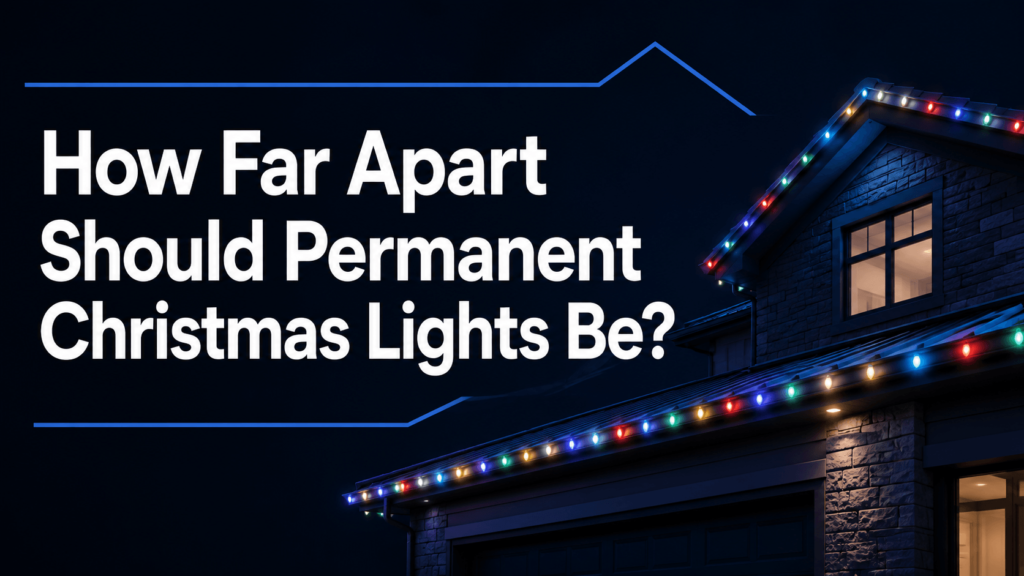
Permanent Christmas light spacing has a big effect on how your home looks during the holidays and throughout the rest of the year. With a system from ShawTech Lighting, homeowners can plan roofline lighting that feels clean, consistent, and built around the shape of the house instead of guessing where each light should land.
Spacing affects brightness, color flow, shadow patterns, and the finished curb appeal of the home. Lights placed too close together can feel crowded. Lights placed too far apart can leave the roofline looking thin, uneven, or unfinished. The right spacing creates a steady rhythm across the fascia, soffit, peaks, corners, and garage lines.
Why Permanent Christmas Light Spacing Matters
Permanent Christmas lights are different from temporary string lights. Once installed, they stay in place year-round. That means spacing needs to work for Christmas displays, warm white everyday lighting, game day colors, birthdays, patio evenings, and simple curb appeal scenes.
Spacing also affects how the lights appear from the street. A light pattern that looks strong from a ladder can look completely different from the driveway or sidewalk. The goal is a smooth, repeatable pattern that follows the home’s architecture.
Good spacing helps with:
- Cleaner roofline definition
- Better color transitions
- More even brightness
- Fewer dark gaps
- A more finished daytime appearance
- Better results around peaks and corners
- Easier planning for future light scenes
Common Permanent Light Spacing Ranges
Many permanent Christmas light systems use spacing between 6 inches and 18 inches, depending on the light type, roofline height, brightness, and desired look. Some homeowners prefer a tighter pattern for a bold holiday display, while others like a softer pattern for year-round use.
The right distance depends on the size of the lights and how visible you want them to be.
| Spacing Range | General Look | Works Well For |
| 6 Inches Apart | Bright, dense, bold | Strong holiday displays and detailed rooflines |
| 9 Inches Apart | Balanced and visible | Most front rooflines and garage areas |
| 12 Inches Apart | Clean and moderate | Everyday use, soft curb appeal, longer rooflines |
| 16 To 18 Inches Apart | Wider and subtle | Large homes, higher rooflines, lower brightness goals |
A 9-inch to 12-inch spacing range often works well for many homes because it creates a clean pattern without feeling too crowded.
Think About The View From The Street
Permanent Christmas lights should be planned from the main viewing angle. For most homes, that means the street, driveway, and sidewalk. The spacing should look even from those areas, not only from directly below the roofline.
A two-story home may need closer spacing or brighter settings because the lights are farther from the viewer. A one-story home may look great with wider spacing because the lights are closer to eye level.
Before installation, take a wide photo of the front of the home. Mark the rooflines you want to light and note the areas that will be seen most often.
Viewing Areas To Check
- Street view
- Driveway view
- Front walkway
- Front porch
- Side yard approach
- Main indoor window views
- Neighbor-facing corners
Looking from several angles helps prevent odd gaps around corners, peaks, and garage lines.
Match Spacing To The Roofline Height
Roofline height changes how spacing appears. Lights that are 12 inches apart on a low porch may feel close and bright. The same spacing on a tall second-story gable may look more subtle.
Higher rooflines often need a clear pattern so they do not disappear at night. Lower rooflines can handle softer spacing because the lights are easier to see.
Simple Height Guide
One-Story Rooflines
For many one-story homes, 9-inch to 12-inch spacing gives a clean, steady look. The lights are close enough to be visible without making the roofline feel too heavy.
Two-Story Rooflines
For second-story rooflines, tighter spacing may help the light pattern read better from the ground. This is especially helpful on steep peaks or tall gables.
Porch And Patio Areas
Covered patios and porches often look better with softer spacing and lower brightness. The lights are closer to people, so a gentle setting can feel more comfortable.
Plan Spacing Around Peaks And Gables
Peaks and gables need extra attention because the eye naturally follows the lights upward. If spacing is uneven near the top, the whole section can look off.
Measure each side of the peak separately. Try to keep the left and right slopes visually balanced. A light should not land awkwardly close to the peak point unless that spacing repeats cleanly on both sides.
For gables, think of each roof edge as part of one shape. The goal is for the lights to trace the structure in a smooth, steady pattern.
Peak Spacing Tips
- Measure both slopes before installing
- Keep both sides visually balanced
- Avoid crowding several lights near the peak
- Keep the pattern steady through the angle
- Step back and check the view from the street
- Make track cuts where they look clean
Plan Spacing Around Corners
Corners can make permanent Christmas lights look polished when planned well. If the spacing changes too suddenly around a corner, the light line can look broken.
Outside corners often appear around garages, porches, and roof returns. Inside corners may appear where gables meet lower rooflines. Both areas need a clean transition.
Try to keep the first light after a corner consistent with the last light before the corner. This makes the turn feel natural.
Spacing For Everyday Lighting
Permanent Christmas lights are often used long after December. For everyday lighting, many homeowners prefer a softer look. Wider spacing, lower brightness, and warm white settings can make the home feel welcoming without looking like a full holiday display.
Everyday scenes may include:
- Warm white roofline glow
- Soft patio lighting
- Subtle entryway lighting
- Game day color accents
- Birthday colors
- Seasonal colors for fall or spring
- Low brightness evening scenes
A slightly wider pattern can work well for daily use, especially when the lights are bright enough to define the roofline.
Spacing For Holiday Displays
Holiday displays often call for more visual energy. Tighter spacing can make color chases, fades, and animated scenes look fuller. If lights are too far apart, moving effects may look choppy or disconnected.
For Christmas, Halloween, Independence Day, and other major events, closer spacing can create a stronger effect. The roofline becomes more defined, and color changes appear smoother.
Common Spacing Mistakes To Avoid
Poor spacing usually shows up after the lights are turned on for the first time. Careful planning can prevent many of these issues.
Common mistakes include:
- Starting without measuring each roofline
- Treating peaks as straight runs
- Letting corners break the spacing pattern
- Placing lights too far apart on tall sections
- Using crowded spacing on small porches
- Ignoring the main street view
- Forgetting how the system will look year-round
- Placing lights where wires or cuts stand out
A good spacing plan should feel consistent, even when the roofline changes direction.
How To Choose The Right Spacing For Your Home
Start with the main front roofline. Choose a spacing range that fits the home’s height, shape, and viewing distance. Then apply that same rhythm to garages, peaks, gables, and porch areas.
For many homes, 9-inch or 12-inch spacing gives the most flexible look. It works for holiday displays and daily scenes without making the roofline feel too packed.
Homes with tall rooflines, steep peaks, or bold holiday goals may benefit from closer spacing. Homes with simple, low rooflines may look clean with a softer pattern.
Final Thoughts On Permanent Light Spacing
Permanent Christmas light spacing should be planned with the whole home in mind. The right distance between lights helps the roofline look balanced, the colors look smoother, and the finished system feel more natural across peaks, corners, garages, and porches.
A clean spacing plan also makes the lights more useful beyond the holiday season. With help from ShawTech Lighting, homeowners can create a permanent lighting layout that looks sharp for Christmas, calm for everyday evenings, and ready for seasonal displays year-round.
About the Author